
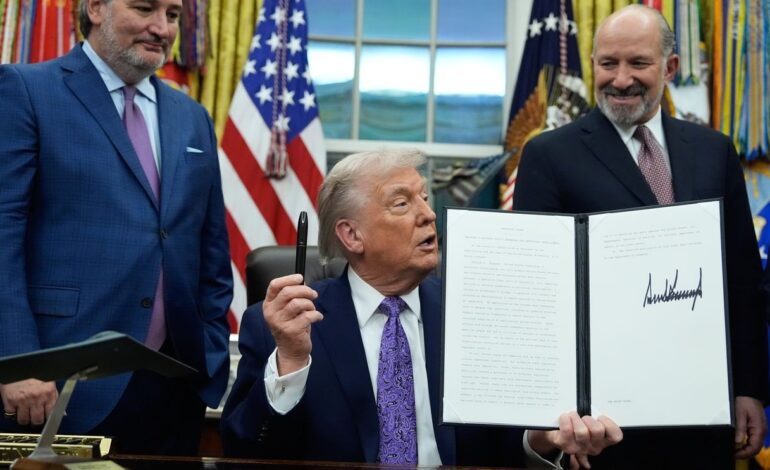

President Trump has signed an executive order focused on artificial intelligence (AI), aiming to bolster America’s position as a leader in technological innovation. This move reflects the administration’s ambition to enhance national security and boost economic competitiveness against global rivals such as China.
Strategic Implications of the AI Executive Order
The executive order marks a strategic shift in U.S. policy towards artificial intelligence, recognizing its potential to reshape global power structures. By prioritizing AI development, the U.S. aims to harness cutting-edge technology to maintain its military and economic dominance. This ambition is set against the backdrop of increasing competition from countries like China, which has heavily invested in AI. The order calls for federal agencies to allocate resources strategically and collaborate with the private sector to drive innovation. It underscores the significance of AI in national security, emphasizing enhancements in capabilities such as cybersecurity and defense.
The Role of Federal Agencies and Private Sector Collaboration
Federal agencies play a crucial role in implementing the AI executive order, tasked with fostering an environment conducive to innovation and rapid development. The order instructs agencies to prioritize AI in research and funding agendas. Additionally, it stresses the importance of collaboration between the government and the private sector, aiming to leverage the expertise and agility of industry leaders. This partnership is essential for achieving breakthroughs in AI that can propel the U.S. to the forefront of technology. Companies are encouraged to share data and insights with government entities to synergize efforts in AI advancements.
Challenges and Opportunities in Achieving AI Dominance
While the executive order sets an ambitious roadmap for AI leadership, several challenges lie ahead. These include concerns about ethical implications, privacy, and the potential for job displacement due to automation. Balancing innovation with ethical standards will be vital in gaining public trust. However, the opportunities are immense. By capitalizing on AI, the U.S. can unlock new economic growth areas, enhance healthcare delivery, and improve infrastructure. Moreover, strengthening AI capabilities could serve as a deterrent against cyber threats and improve national defense mechanisms. As the AI landscape evolves, flexibility and continuous engagement with experts will be crucial.
Conclusion
The signing of the AI executive order represents a significant step towards positioning the U.S. as a global leader in technological innovation. By fostering cooperation between agencies and the private sector, and addressing ethical challenges, the U.S. aims to secure strategic advantages in AI development, bolstering national security and economic prowess.


