
In 2025, the U.S. military fully embraced artificial intelligence, transforming national defense capabilities. This article explores how AI was integrated across various sectors, enhancing efficiency, decision-making, and strategic operations, marking a pivotal point in military technology and security.
AI Integration into Military Operations
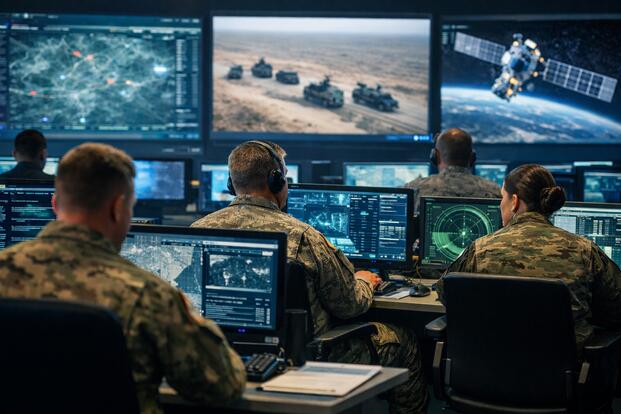
The integration of AI in military operations marked a milestone in 2025, significantly enhancing the U.S. military’s strategic capabilities. By deploying advanced algorithms, the military improved decision-making processes and situational awareness on the battlefield. New AI systems were utilized for intelligence analysis, logistics management, and threat assessment. This technological advancement not only streamlined military operations but also provided a competitive edge against global adversaries. Through AI’s predictive analytics, commanders were able to anticipate threats more accurately, facilitating preemptive actions that ensured the security and efficiency of military missions.
Enhancing Cybersecurity and Communication
AI significantly bolstered cybersecurity measures within the U.S. military by detecting and mitigating potential threats faster than ever before. Machine learning algorithms were employed to identify vulnerabilities in real-time, resulting in fortified defense mechanisms against cyberattacks. Additionally, AI improved secure communication channels, ensuring that sensitive information remained protected. By automating network monitoring and control, AI diminished the risks of human error and enhanced overall system reliability. This robust cybersecurity infrastructure cemented the military’s defense posture in the digital realm, safeguarding critical data and communication lines.
AI and Autonomous Systems in Defense
Incorporating AI into autonomous systems transformed U.S. military defense strategies. Unmanned aerial vehicles (UAVs) and ground vehicles were equipped with advanced AI to perform reconnaissance and surveillance operations autonomously, reducing the need for human intervention in hazardous environments. These autonomous systems collaborated with human counterparts in real-time, augmenting battlefield capabilities and reducing personnel risks. AI also optimized resource allocation and mission planning, ensuring precision and efficiency in executing military objectives. This innovative use of AI-powered autonomous systems marked a new era in military operations, blending human expertise with cutting-edge technology for superior performance.
Conclusion
The year 2025 was a turning point for the U.S. military as AI redefined defense strategies and operations. The integration of AI into military operations, cybersecurity, communication, and autonomous systems enhanced efficiency and strategic capabilities, establishing a formidable defense framework. AI’s role in shaping military technology is set to continue, promising ongoing advancements in national security.