The Unraveling of Maduro’s Regime: A Closer Look at U.S. Strikes and Capture in Venezuela

In January 2026, geopolitical dynamics shifted dramatically following the capture of Venezuela’s leader, Nicolas Maduro, after a series of calculated U.S. military strikes. This article examines the strategic maneuvers and implications of these events, offering a comprehensive view of the pivotal actions that reshaped Venezuela’s future.
The Prelude to Intervention
The tension leading up to the U.S. strikes in Venezuela had been building for years, marked by economic turmoil and political instability. As discontent among Venezuelans grew, the international community watched closely. The U.S., citing humanitarian concerns and regional stability, began strategizing its intervention to thwart the Maduro regime, culminating in targeted military actions.
Strategic Execution
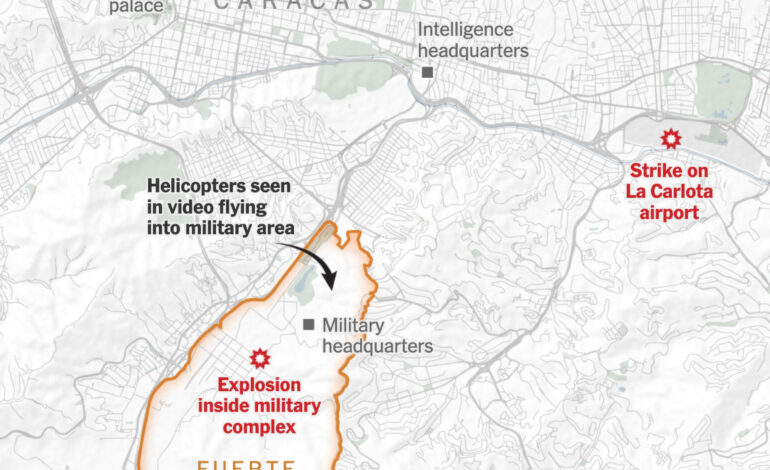
On the ground, the U.S. military conducted precise operations to destabilize Maduro’s hold on power. **Coordinated airstrikes** targeted key military installations, disrupting communications and diminishing the regime’s defensive capabilities. The operation was underpinned by intelligence from local informants, regional allies, and advanced surveillance technology, which combined to ensure minimal collateral damage and maximum strategic impact.
The Complex Capture
The capture of Nicolas Maduro was the culmination of years of diplomatic pressure and decisive military action. **Resistance was anticipated**, yet the swift apprehension highlighted the effectiveness of international cooperation and the presence of internal dissidents. This pivotal moment marked a significant chapter in Venezuelan history, paving the way for potential political reforms and renewed optimism among its citizens.
Implications for Venezuela and the Region
The aftermath of Maduro’s capture initiated a period of uncertainty and opportunity within Venezuela. **Regional politics shifted**, with neighboring countries reassessing alliances and diplomatic strategies. This moment fostered an environment ripe for reformation, both politically and economically, amid hopes for stability and growth that extend beyond Venezuela’s borders.
Conclusion
Maduro’s capture was a turning point in Venezuela’s tumultuous history. The strategic U.S. intervention set a precedent for future international engagements and underscored the potential for change when diplomatic efforts align with military precision. As Venezuela navigates this new era, the global community remains attentive to the rippling effects of these transformative events.