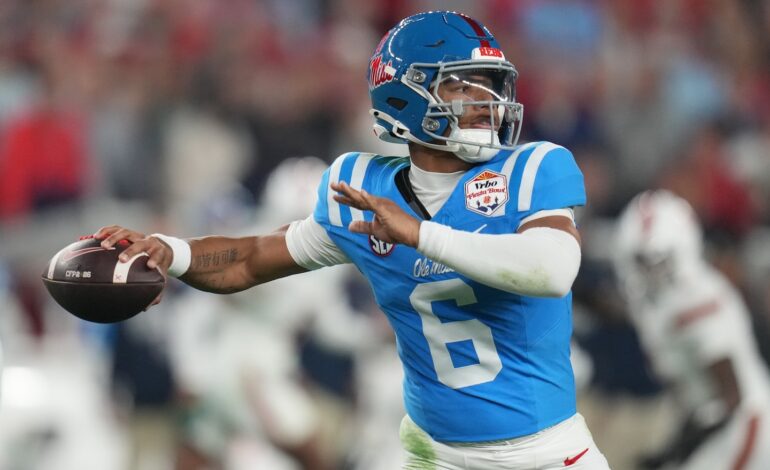
Trinidad Chambliss Takes Legal Action Against NCAA for Extended Eligibility

In an unexpected move, Trinidad Chambliss, a standout player from Mississippi, has filed a lawsuit against the NCAA seeking another year of eligibility. This legal battle could have significant implications for college athletics, questioning the fairness and consistency of NCAA regulations governing student-athlete eligibility.
Background of the Case
Trinidad Chambliss has been a key player in Mississippi’s athletic successes. His contribution has not only elevated the team but also highlighted him as a standout athlete worthy of professional attention. However, his journey has encountered unforeseen challenges, prompting him to take legal action against the NCAA.
The Legal Grounds
Chambliss’s lawsuit focuses on the inconsistencies in NCAA eligibility rules. He argues that these regulations are often arbitrary and lack transparency, negatively affecting athletes’ careers. By challenging these rules, Chambliss hopes to set a precedent allowing for fairer treatment of student-athletes across the country.
Potential Impact on College Sports
This lawsuit has sparked a wide-ranging debate about the future of college sports governance. If successful, Chambliss’s case could lead to significant changes in how eligibility is determined, potentially offering more flexibility and fairness to athletes pursuing both academic and sports careers.
Response from the NCAA
The NCAA has expressed its intention to defend its eligibility policies vigorously, emphasizing their role in maintaining college sports’ integrity. However, the organization faces increasing pressure from various stakeholders demanding reforms to ensure student-athletes are adequately supported and fairly treated.
Conclusion
Trinidad Chambliss’s lawsuit against the NCAA challenges the core of the organization’s eligibility regulations. This case not only shines a light on potential shortcomings in policy but also sets the stage for a wider discussion on fairness in college sports. Its outcome could drive meaningful change in balancing athletes’ academic and athletic pursuits.