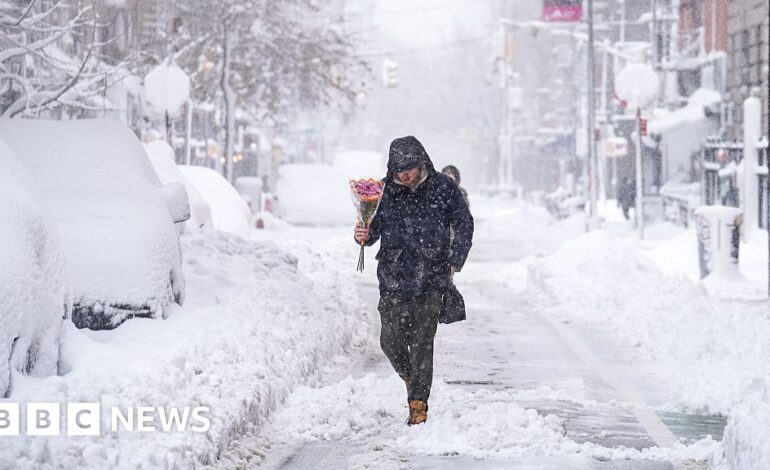
Chaos in the Skies: US East Coast Grapples with Massive Snowstorm Fallout

The US East Coast is battling severe disruptions as a record-breaking snowstorm leads to the cancellation of over 5,000 flights. This article delves into the storm’s impact on aviation, the challenges faced by airports, and the broader implications for residents and travelers. Discover how communities are responding to this extreme weather event.
The Storm’s Crushing Impact on Air Travel
The snowstorm’s intensity overwhelmed airports from New York to North Carolina, forcing the cancellation of over 5,000 flights. Airlines are scrambling to accommodate the surge of affected passengers. The situation highlights the vulnerabilities within our heavily interdependent air travel network, leaving thousands stranded and creating ripple effects worldwide.
Challenges for Ground Operations
While planes remained grounded, airport ground operations teams faced their own set of daunting challenges. Clearing runways and maintaining equipment under harsh winter conditions is arduous. The pressure on airport staff during such weather extremes is immense, as they strive to ensure traveler safety and minimize disruption.
Community Response and Resilience
The storm didn’t just affect flights—it tested the resilience of communities throughout the region. Residents banded together, assisting in snow removal and providing mutual support to weather-stricken neighbors. Local governments and emergency services worked tirelessly to restore normalcy and assist those in need.
The Broader Implications for Future Travel
Record-breaking weather events such as this snowstorm bring to light the need for improved infrastructure and strategic planning. As climate change potentially increases the frequency of such events, the aviation industry must adapt to minimize future disruptions and maintain connectivity.
Conclusion
The record-breaking snowstorm on the US East Coast serves as a stark reminder of the vulnerability of travel networks to severe weather. With over 5,000 flights canceled, the need for enhanced preparedness and resilient infrastructure is clear. This event underscores the importance of community cooperation and systemic adaptability in the face of increasingly unpredictable climates.