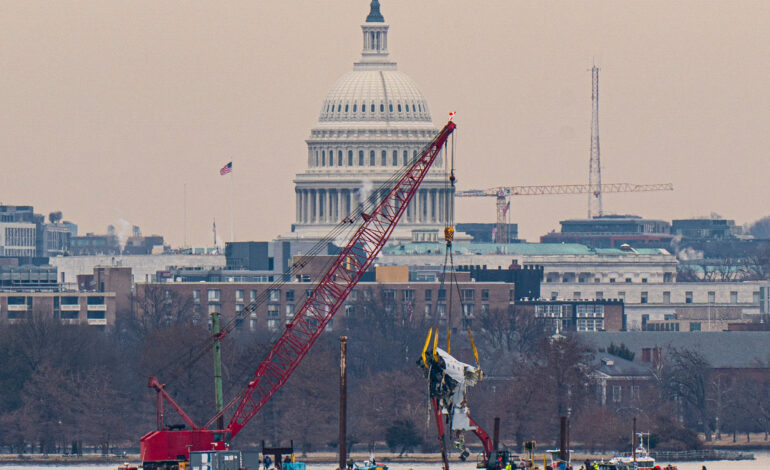
House Rejects Critical Air Safety Bill Amid Pentagon Concerns

The House’s rejection of the Rotor Act, aimed at enhancing air safety protocols, has stirred controversy after Pentagon raised opposition. This decision comes in the wake of a troubling plane crash investigation in Washington D.C., highlighting the complexities of implementing robust safety measures without compromising national defense priorities.
Background of the Rotor Act
The Rotor Act was introduced as a legislative response to ongoing concerns about air traffic safety, specifically targeting vulnerabilities exposed by recent accidents. Its primary goal was to mandate enhanced safety protocols and increase funding for air traffic control upgrades, ensuring more stringent monitoring and communication.
Pentagon’s Concerns
The Pentagon expressed significant concerns over the Rotor Act, citing potential conflicts between civilian air safety measures and military operations. The Pentagon argued that certain provisions could impede military readiness by restricting airspace access and limiting strategic flexibility.
The DC Plane Crash Investigation
The investigation into the recent Washington D.C. plane crash fueled the debate over air safety. Preliminary findings suggested potential failings in current air traffic management systems, underlining the urgent need for reforms. However, the Pentagon emphasized that military considerations should not be overlooked in the pursuit of safety enhancements.
House Decision and Political Ramifications
The decision to reject the Rotor Act was met with mixed reactions. Proponents of the bill criticized the outcome, arguing that it represents a missed opportunity to address critical safety gaps. Conversely, opponents, siding with the Pentagon, underscored the importance of balancing safety with national defense needs.
Conclusion
The House’s rejection of the Rotor Act amidst Pentagon opposition highlights the ongoing tension between improving air safety and maintaining military priorities. As debates continue, finding a compromise that ensures both enhanced safety measures and defense readiness remains a significant challenge for policymakers.