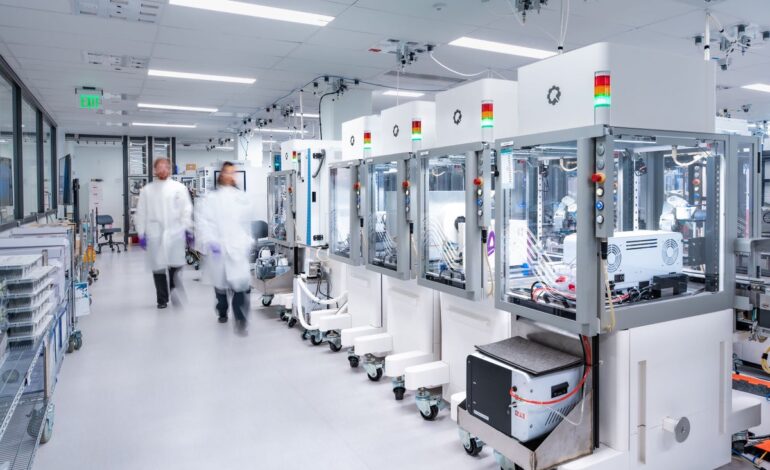

As computing power reaches new heights, the focus shifts to energy production as the primary constraint in the advancement of artificial intelligence. This article explores how energy requirements are the new bottleneck for AI technologies and the implications for the future.
The Rise of AI and Its Computing Foundations
Artificial Intelligence (AI) has seen exponential growth over recent years, driven by advances in computing power. From natural language processing to autonomous vehicles, AI is reshaping every facet of modern life. However, as we push the limits of computational algorithms, the strain on computing resources, traditionally seen as a barrier, has diminished. Vast improvements in computational efficiency and power mean hardware can now support more complex models. Yet, with this evolution, a new challenge emerges: the energy required to sustain these models.
Understanding the Energy Bottleneck
While hardware advancements continue, energy consumption has become a critical concern for sustained AI development. AI models, particularly deep learning networks, consume significant energy during training and inference phases, creating new obstacles in scalability and efficiency. High energy demands not only increase operational costs but also raise environmental and sustainability concerns. As the focus shifts from manufacturing more powerful chips to optimizing their energy consumption, the industry must innovate to circumvent these constraints.
Addressing Energy Demand Challenges in AI
Innovators and researchers are actively seeking solutions to the energy bottleneck in AI development. Techniques such as model compression and energy-efficient chip design are paving the way for a more sustainable AI future. Furthermore, there is increasing investment in renewable energy resources to power massive data centers. By focusing on these energy-efficient strategies, the AI industry can ensure continued development without compromising environmental responsibilities, paving the way for a more sustainable integration of AI technology.
Conclusion
With computing power no longer a major hurdle, the AI industry faces the challenge of energy efficiency. Addressing this bottleneck is crucial for sustainable growth, requiring innovative solutions and renewable energy integration to keep pace with advancements. By focusing on these critical areas, AI can continue to grow responsibly and effectively.