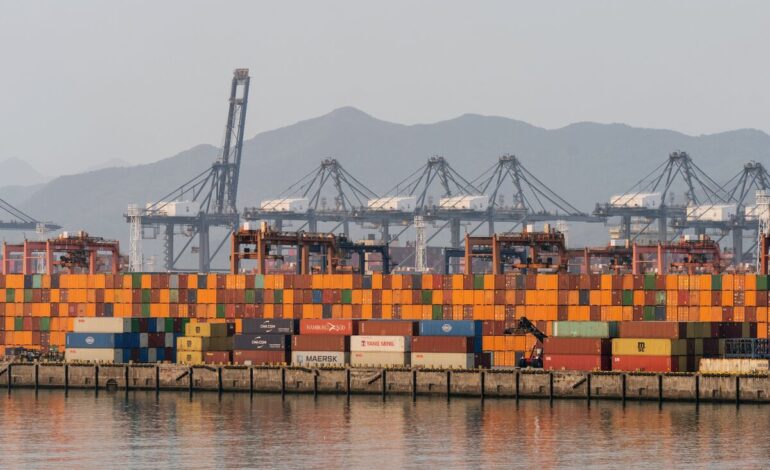

China’s robust export-driven economic growth is under scrutiny as the nation faces heightened threats from escalating tariffs. This article explores the potential repercussions on China’s economy, delving into the country’s dependence on exports, the global trade landscape, and potential strategies to mitigate these risks.
The Foundation of China’s Export-Driven Growth
China has long established itself as a global manufacturing powerhouse, significantly contributing to its GDP through exports. This export-led strategy has driven economic prosperity but also exposed vulnerabilities, particularly in times of global trade tensions.
Impact of Tariff Increases on Chinese Exports
The imposition of higher tariffs by key trading partners threatens to disrupt China’s export momentum. **Steeper tariffs** can lead to reduced demand for Chinese goods, diminished trade volumes, and potential economic slowdown, impacting sectors heavily reliant on international trade.
Global Trade Dynamics and China’s Position
As global trade tensions rise, China’s role in the international market is being reshaped. Navigating these changes requires understanding complex trade agreements, potential **shifts in supply chains**, and the evolving landscape of international commerce.
Strategies for Mitigating Tariff Impacts
To counteract the adverse effects of tariffs, China must explore **strategic economic adjustments**. This includes fostering domestic consumption, investing in technological innovation, and seeking diversified export markets to buffer against external trade pressures.
Conclusão
In conclusion, China’s reliance on export-driven growth is pressing the nation to adapt to an increasingly complex global trade environment. As tariff pressures mount, it becomes imperative for China to diversify its economic strategies, embrace domestic consumption, and foster innovation to ensure sustainable growth in the face of external challenges.