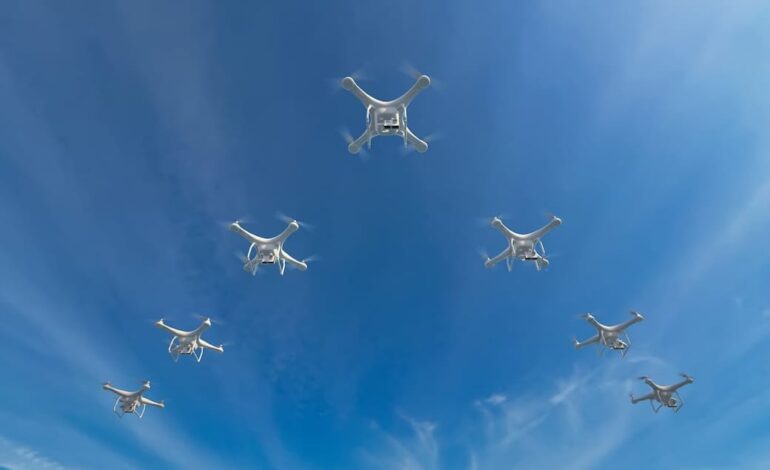

Swarm intelligence draws inspiration from nature to develop sophisticated artificial intelligence systems. By studying the collective behavior of animals such as bees or ants, scientists are creating AI models that solve complex problems through collaboration and adaptability. Discover how swarm intelligence is revolutionizing AI and paving the way for innovative solutions.
The Foundations of Swarm Intelligence
Swarm intelligence is a concept derived from the natural world, where the collective behavior of animal groups like bird flocks or fish schools achieves goals beyond the capabilities of individual members. This decentralized approach relies on simple rules and local interactions, leading to emergent behaviors. As AI researchers explore these natural phenomena, they strive to design systems that mimic their efficiency and adaptability. Such systems use localized decision-making to process information, optimizing solutions without a centralized command. This emerging field presents a paradigm shift in AI, focusing less on central control and more on collective dynamics.
Real-World Applications of Swarm Intelligence
Swarm intelligence has numerous applications across various industries, showcasing its versatility and potential. In robotics, swarms of drones can survey large areas, coordinate search and rescue missions, or monitor environmental changes. Traffic management systems use swarm algorithms to optimize flow, reducing congestion without human intervention. Furthermore, in optimization problems, such as supply chain logistics or network routing, swarm intelligence aids in finding optimal solutions by exploring numerous possibilities simultaneously. These applications demonstrate how swarm intelligence can enhance efficiency and innovation across multiple domains.
The Future of Swarm Intelligence in AI
The future of swarm intelligence in AI holds promising advancements, with ongoing research aiming to harness its full potential. As machine learning techniques advance, integrating swarm intelligence can lead to more robust and adaptive systems. Researchers are exploring enhanced communication protocols and artificial pheromones to improve coordination among agents. Additionally, incorporating swarm intelligence in self-organizing networks and smart cities could revolutionize urban living. As we continue to develop AI systems inspired by nature’s ingenuity, the scope of swarm intelligence is set to expand, offering innovative solutions to complex global challenges.
Conclusion
Swarm intelligence, inspired by nature, is a transformative force in AI, offering innovative solutions to complex challenges. By mimicking collective behaviors found in nature, researchers develop adaptive, efficient AI systems with real-world applications. As this field evolves, the future holds exciting prospects for integrating swarm intelligence across diverse domains, enhancing technology’s collaborative potential.