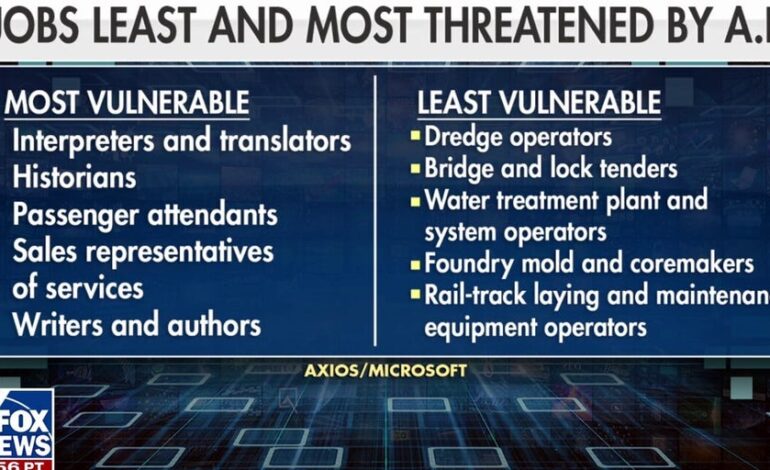

As artificial intelligence continues to reshape industries, blue-collar jobs stand resilient against automation threats. In examining the dynamics of AI and its impact on the workforce, it’s crucial to understand why these hands-on professions remain less susceptible to the rapid technological change.
Exploring AI’s Impact on the Job Market
In recent years, artificial intelligence has demonstrated its ability to transform various job sectors, from customer service automation to advanced data analysis. However, blue-collar jobs appear less impacted by this technological wave. The manual and physical skills required for these roles pose a challenge for AI systems, which excel in tasks involving data processing rather than physical interaction. This has allowed the workforce in industries like construction, manufacturing, and plumbing to remain relatively secure, even as AI technology continues to evolve and be integrated across different sectors.
Why Blue-Collar Jobs Are Less Threatened
One significant reason blue-collar jobs are less threatened by AI is the current limitations of robotic automation in replicating complex human movements and problem-solving skills that these roles often entail. For instance, a skilled tradesperson working on intricate repairs or installations commands a level of dexterity and intuition that current AI technologies cannot effectively mimic. This demand for nuanced physical labor ensures that these occupations remain indispensable. Furthermore, the cost of developing AI systems capable of performing these tasks with the same efficiency and precision as humans may not be justifiable, thereby securing the human element in blue-collar work.
The Future of Employment in an AI-Influenced Era
Looking forward, the relationship between AI and employment will likely evolve, requiring adaptation from all sectors. While blue-collar jobs enjoy a current shield from AI replacement, there is increasing integration of technology designed to aid rather than replace workers. This synergy aims to enhance productivity and improve safety standards. Continual education and training in tech-enhanced skills could become essential in maintaining this balance, ensuring workers are equipped to collaborate with and control advanced machines, thereby reinforcing the security of these jobs amidst escalating technological integration.
Conclusion
Despite the ongoing advancements of AI, blue-collar jobs continue to thrive due to their reliance on complex physical tasks and problem-solving abilities that AI has yet to master. As industries advance, balancing human skills with technological aid promises to maintain the relevance and necessity of skilled labor, securing these jobs for the foreseeable future.