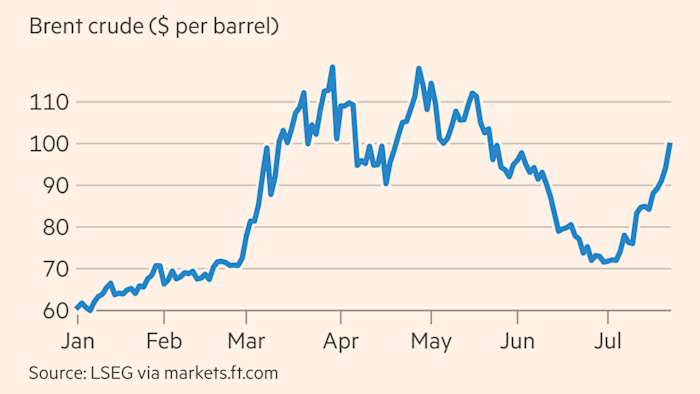

Oil prices have surged, reaching $100 per barrel, a level not seen since May. This article explores the ripple effects of this price hike across the global economy, examining potential impacts on industries, consumer behaviors, and future trends in energy consumption and production.
Understanding the Causes of Rising Oil Prices
Global demand for oil has surged due to recovery in economic activities post-pandemic. Coupled with ongoing supply disruptions in key oil-producing regions, prices have hit $100 per barrel. OPEC’s production policies and geopolitical tensions also contribute significantly to these price changes.
Impact on Global Economy
The increased oil prices are affecting economies worldwide. Industries dependent on fuel, such as transportation and manufacturing, face higher operational costs. This trickles down to consumer prices, leading to inflationary pressures globally.
Consumer Reactions and Industry Adjustments
Consumers are likely to adjust spending habits, prioritizing essential purchases. Industries may accelerate transitions to renewable energy sources or innovate in energy efficiency to mitigate costs. The push for sustainable energy solutions gains momentum as oil prices remain volatile.
Future Trends in Energy Markets
The upward trend in oil prices is prompting a reevaluation of energy strategies among countries and corporations. Renewable energy investments are expected to rise, as nations strive to secure energy independence and mitigate future economic disruptions.
Conclusion
Surging oil prices will have wide-ranging impacts, from increasing operational costs for businesses to affecting consumer spending and accelerating the shift towards renewable energy. Economic sectors sensitive to fuel costs may face challenges, while the overall transition to sustainable energy solutions could accelerate.